


Metrology Glossary: Inclinometer

What Is An Inclinometer?

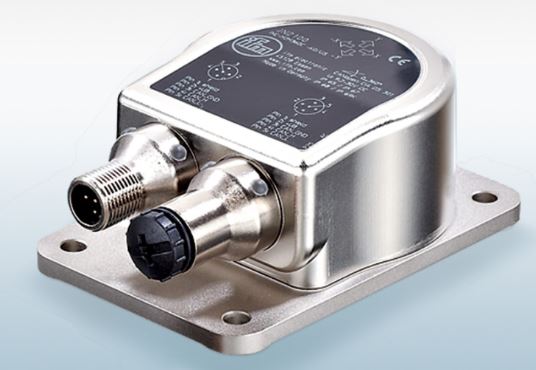
An inclinometer serves as a tool for gauging the angular displacement of an object from the horizontal plane. Whether determining slope, pitch, or tilt, it precisely measures the degree to which an object deviates from a level position influenced by the gravitational force. This device provides a numerical representation of an object’s inclination, aiding in the assessment of its deviation from perfect alignment with gravity.

What Are Inclinometers Used For?

Inclinometers prove to be versatile instruments contributing to precision and safety in various industries. In the construction industry, inclinometers are indispensable tools for evaluating the incline of roofs and slopes, ensuring both proper drainage and structural integrity in building projects. The aerospace industry relies on inclinometers to monitor aircraft tilt during takeoff, landing, and flight, maintaining stability and preventing accidents. In the medical field, these devices assess joint range of motion, aiding in injury evaluation and recovery monitoring, particularly in areas like knee and elbow joints. Additionally, in engineering, inclinometers play a critical role in quantifying incline angles for ramps and structures, ensuring safety and accessibility standards are met in buildings and roads.

Metrology Glossary: Inclinometer 1

Related Terms

Products and Services

Further Reading

automated gloss measurement machine
Much to the dismay of those in metrology, measurement error is unavoidable and can never be fully eliminated. The key is in understanding the causes of the error, and whenever possible minimizing its effects. There are three main categories that measurement error fall into: systematic, human, and random error.
March 26, 2018
Cross Logo
Distillery
As the Food Safety Modernization Act (FSMA) forces food and beverage companies to move from reactive to proactive in their approaches to food safety, much of the specifics of what auditors will be looking for remain to be seen.
July 24, 2017
Cross Logo
leadscrew and custom automation components from cross
In Motion Control, there are many examples of vertical applications, and the examples can vary widely. Whether it’s a packaging gantry or a robot end effector, linear actuators commonly are used to lift loads against gravity. However not all actuators have a brake integrated into the vertical actuation.
October 29, 2020
Cross Logo

Glossary Tags

Equipment Parts and Components

Browse our Terminology Glossary

#

A

B

C

D

E

F

G

H

I

J

K

L

M

N

O

P

Q

R

S

T

U

V

W

X

Y

Z

See how our team can help improve efficiency, reduce risk, and raise quality in your process.

Contact our Team

"*" indicates required fields

This field is for validation purposes and should be left unchanged.
What can we help you with today?*

Where Can We Send Your Information?

Name*
Company Location*
This field is hidden when viewing the form
Form Type
This field is hidden when viewing the form

Hang Tight! We're Searching... Searching... Searching...

We’re looking through thousands of pages to find the most relevant information.

In the meantime, enjoy these fun facts…

Did you know… Cross Company is an ESOP (Employee Stock Ownership Plan). Our ESOP started in 1979 and as of 2006, we are 100% employee-owned! Learn more about our ESOP and how that benefits both team members and our customers.
Did you know... the precision measurement group at Cross was founded in 1939 by our current CEO's grandfather, Jim King. That's a whole lot of calibration!
Did you know... A fingerprint weighs about 50 micrograms. We know, we weighed it! The residue left from a finger can actually make a difference in weight results which is why we wear gloves when we calibrate weights. For reference, a sheet of paper is about 4.5 grams, that’s 4.5 million micrograms.
Did you know… Cross Company has grown significantly since our start in 1954. Over the years we've acquired 26 companies! Today, our five groups have expertise in everything from industrial automation to precision measurement, and industry knowledge going all the way back to 1939.