





Metrology Glossary: Shift Test
What Is The Shift Test?
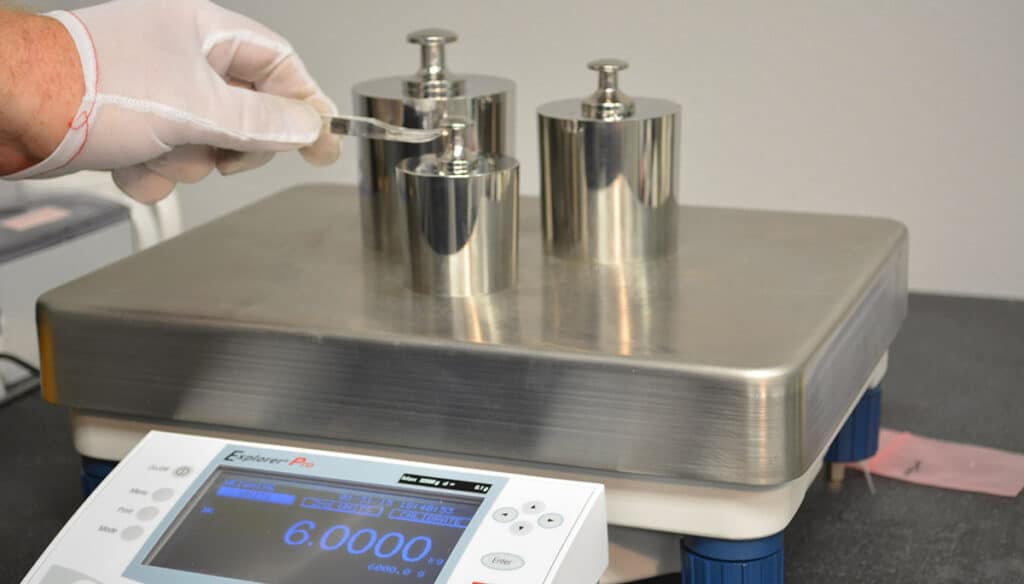
The shift test is a systematic procedure used to evaluate the reliability and precision of a weighing scale when subjected to off-center loading conditions. This assessment method involves placing a test weight at multiple designated positions across the scale’s platform and documenting the weight readings corresponding to each specific placement. By analyzing and comparing the results obtained through the shift test against the manufacturer’s stipulated accuracy specifications, one can deduce whether the scale is capable of delivering accurate measurements, even when the load is not perfectly centered on the platform.
What Is The Shift Test Used For?
- Detecting Platform Inconsistencies: By strategically placing weights at designated locations, the shift test becomes a valuable tool for uncovering irregularities or deviations in the platform’s responsiveness across its entire surface. This becomes particularly crucial for expansive platforms where there’s an increased likelihood of off-center loading.
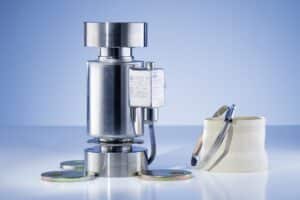
- Validating Load Cell Integrity: Typically situated at each corner of the platform, load cells bear the weight of the load. The shift test is instrumental in evaluating the individual performance of these load cells. Discrepancies in weight readings at different positions can be indicative of a malfunctioning load cell.
- Ensuring Compliance with Regulations: Industries such as food processing, pharmaceuticals, and retail necessitate adherence to specific accuracy regulations for weighing scales. The shift test stands as a documented verification method, affirming that the scale aligns with these regulatory standards, even when subjected to non-ideal loading conditions.
Related Terms
Cornerload error refers to the variance between the weight exhibited on a scale and the true weight of an object....
Cornerload refers to the precise force or weight exerted upon an individual corner of a scale that incorporates multiple load cells....
A load cell is a precise instrument used to measure an object's weight or applied force, converting this physical input into an electrical signal....
Products and Services
Further Reading
Choosing a scale seems like a simple task: just make sure the scale can hold what you usually weigh and the display shows the right number of digits. In reality, there is a little more you need to know to choose the best scale for your application. If you know
January 21, 2020
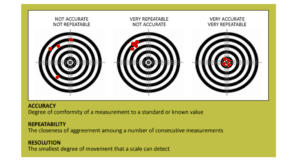
The terms accuracy, repeatability, and resolution can be found on the spec sheets of many engineered products. They are often misunderstood, used interchangeably, or just plain confused. This can cause products to be incorrectly specified and, in many
January 21, 2020