Truck Scale Cheat Sheet
If you regularly use truck scales in your day-to-day operations, you know how important it is for them to be in good working order. That means working when you need them to and showing numbers you can trust.
At Cross Company, we understand how much goes into making sure those truck scales are not only currently in good working order, but that they also stay in good working order.
This cheat sheet was designed to provide quick answers for truck scale owners and operations who routinely rely on them. Of course, we’re always available to test, calibrate, or diagnose any issues with your truck scale. But there’s a lot that scale owners can do too in order to extend the lifespan of their scales and to prepare them for environmental conditions year-round.
General Maintenance
 While truck scales are more rugged than a lot of other scales, they’re not immune to unfavorable conditions.
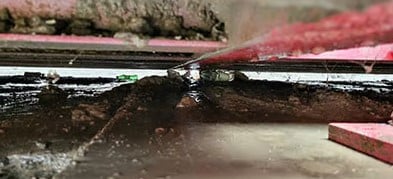
An easy-to-spot issue is debris. Being low to the ground, truck scales can easily accumulate dirt, sand, rocks, trash, and other sediment. This can happen on, under, or even around your scale, potentially causing inaccuracies or premature drift. Make sure debris is regularly being cleared from everywhere, checking under the scale and cleaning with a hose or pressure washer and ensuring I-beams are free of dirt/debris to prevent deterioration. Freeing trapped dirt and rocks from the clearance between the end of your scale and bulkhead also prevents degradation.
Being outdoors, water is always a risk with truck scale operation. There should never be standing water pooling under or around your scale as excess moisture can lead to rust and corrosion which significantly impact accuracy and operation. This is especially critical for pit-mounted scales.
Lastly, it’s important to keep an eye out for cracks, holes, or excessive wear in the scale foundation as well as rust, corrosion, or other damage to the scale itself. A damaged scale is a less-accurate scale.
Quick Tips:
- Check everywhere for debris
- Make sure not just the top is clear of debris. Check under the scale and clear areas surrounding the scale.
- Using a hose or pressure washer to remove trapped dirt, rocks, trash, and other debris keeps the scale in good working order for longer.
- Control water to prevent rust
- Standing water needs to be removed quickly and thoroughly
- Check sump pump (if applicable) and ensure it’s operating properly
- Maintain a free flow with no obstruction for gravity drains to prevent pooling
- Act quickly when damage becomes apparent
- Improper water management can lead to rust or corrosion on the scale
- Cracks or holes in the foundation may not significantly affect operations right now, but will become larger, more expensive fixes in the future
Managing Snow, Ice, and Water Build-Up
If you live in an area of moderate to heavy snowfall, it’s important to know how this impacts your truck scale performance.
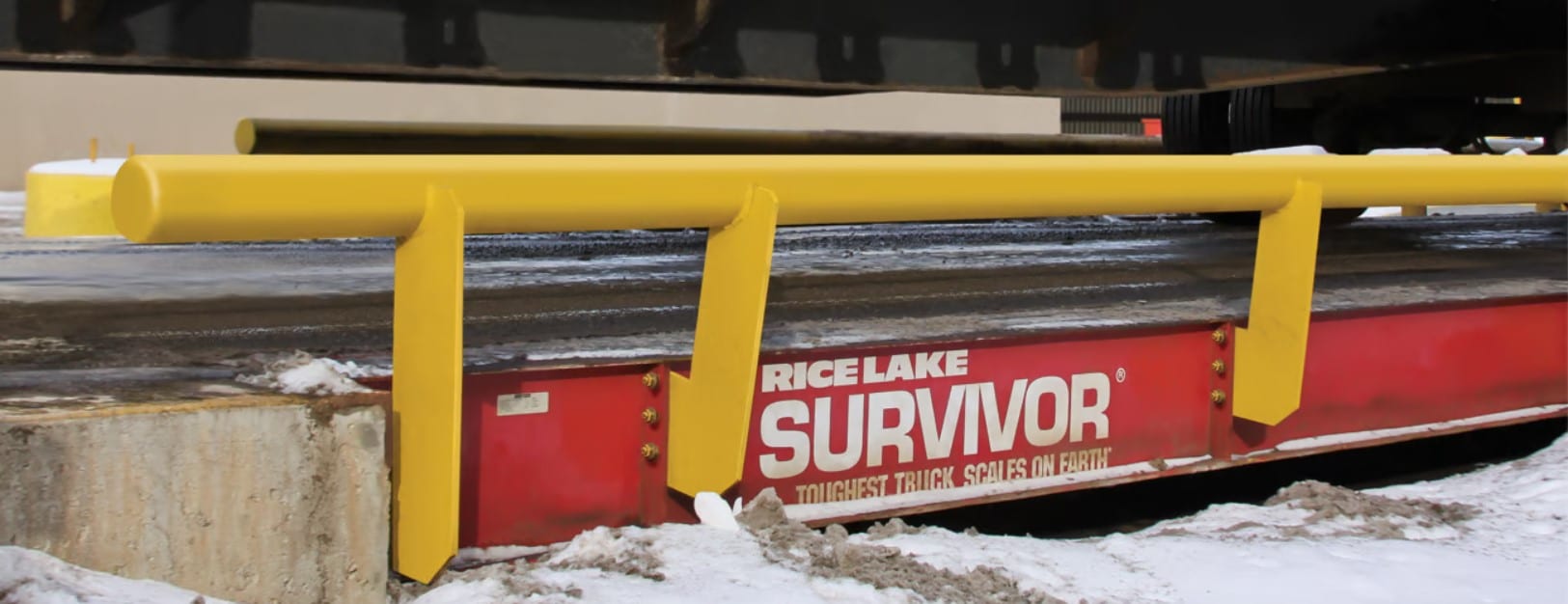
In short: freezing conditions and ice build-up negatively impacts truck scale accuracy and performance. For example, snow build-up in scale suspension components can lead to stiffening, which increases resistance and skews readings. Snow build-up between foundation and weighbridge can add further resistance and can skew accuracy even further.
But it doesn’t have to be actively snowing for frozen conditions to impact truck scale accuracy. Debris swept under or along the sides of the scale itself can contain trace moisture and when that moisture freezes it can cause the same problems.
Even if you’re in a location without significant freezing risk, managing water build-up is still necessary. And if snow is left til thawing, you now have a water issue to deal with!
Quick Tips:
- Prompt clearing prevents harmful build-up
- The best method is simply removing snow and debris from the scale quickly. This avoids the problem of build-up all together
- Avoid snowplows. Heavy machinery doesn’t mix well with delicate scale mechanisms. Instead, use a snow blower
- Stop snow or frozen debris before it gets too close
- Many operations will use some kind of barrier like haybales, sandbags, or even poly drums to prevent snow or debris from blowing under. This can work, but it’s important to remember to get rid of the snow before it melts and flows under the scale!
- If already frozen, avoid the temptation to salt or use chemicals
- If there’s already ice build-up on the scale itself, it’s tempting to opt for a quick-fix like salt or chemicals. However, these solutions can corrode steel components within the scale. Instead, use mobile steam-cleaning equipment
Preparing for the Unexpected
While winter has unique challenges with snow and ice, that doesn’t mean summer is smooth sailing. Warmer weather means we’re coming up on lightning season.
A direct lightning strike (or even on nearby) to your truck scale can short out load cells, wires, junction boxes, and accessories, grinding weighing to a halt.
Quick Tips:
- Ensure your scale is properly grounded
- With a correctly placed and professionally installed grounding system, the current goes right around the electronics. But while grounding is a helpful protection, it’s difficult to retrofit if a scale doesn’t already have it set up and, more importantly, it’s not failsafe. In addition, it needs to be done according to the scale manufacturer’s specification or there may be warranty implications.
- Invest in transient protection
- Many truck scale manufacturers now offer scales and load cells specifically designed to prevent damage from lightning or unexpected electrical surges. These transient protection systems are possible to upgrade to (as long as you ensure the replacement equipment is NTEP-approved and compatible with your scale model)
- Know your warranties
- Whether something has already happened or you’re looking to prepare, it’s necessary to know what’s offered and protected on your scale via the warranty. Variables include what’s covered, how long it’s covered for, whether it’s just load cells or the whole scale, and many other considerations. Knowing the details can make getting back to work after an incident far smoother
- Contact an expert
- If your scale is completely down and no one on-site is able to diagnose and repair the issue, Cross is always available to help. We’ll dispatch a team of expert technicians to assess damage, offer replacement parts, perform recalibration, and get you back up and running as soon as possible