

Metrology Glossary: Infrared Thermometer (IR Thermometer)
What Is An Infrared Thermometer?
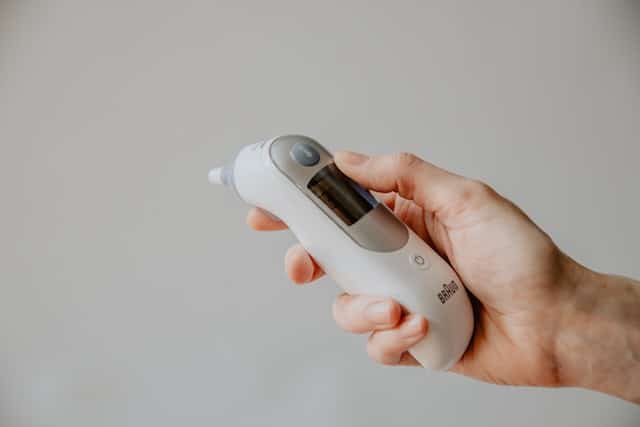
An infrared thermometer, commonly known as an IR thermometer, is a valuable tool for contactless temperature measurement. Its primary function is to determine an object’s temperature by capturing the infrared radiation it emits. Infrared radiation is a form of electromagnetic radiation beyond the visible spectrum, but can be detected through electronic sensors. These thermometers operate by concentrating the infrared radiation emitted by the object onto a sensor, which transforms it into an electrical signal. The thermometer processes this signal to compute the object’s temperature.
What Are Infrared Thermometers Used For?
- Industrial: Supervising machinery and equipment for signs of overheating, pinpointing faulty components, and executing proactive maintenance measures.
- Automotive: Diagnosing engine issues, assessing tire pressure, and detecting electrical abnormalities using accurate infrared temperature readings.
- Construction: Examining insulation for potential leaks, swiftly identifying moisture infiltration, and closely monitoring the progress of drying processes.
- Medical: Precisely gauging body temperature to identify fever symptoms, continuously monitoring the temperature of newborns, and acquiring non-intrusive temperature measurements.
- Food Safety: Verifying food temperatures during both cooking and storage, ensuring adherence to hygiene standards, and mitigating the risk of foodborne illnesses.
- Environmental: Recording precise air and water temperatures, overseeing pollution levels, and investigating thermal characteristics of various materials.
Related Terms
Ambient conditions refer to the surrounding environmental factors of a system or object....
A Resistance Temperature Detector (RTD) is a sensor used for temperature measurement based on the principle of how the electrical resistance of a metal changes with alterations in temperature....
Further Reading
We often hear from customers that they prefer to purchase new equipment instead of paying for calibration. Commonly this is done for lower cost items such as torque wrenches, tape measures, and infrared thermometers.
October 24, 2017