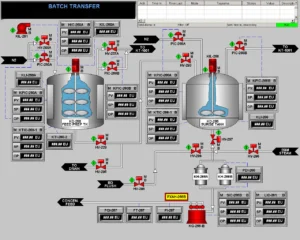
Cross Precision Measurement has been in the measurement business since 1939, so it’s fair to say we know a thing or two about scales. We calibrate thousands of them each year, from the most accurate precision balances to heavy capacity truck and rail scales. One style we work with a lot are tank or hopper scales, which are exactly what they sound like: a tank or hopper which has load cells on each leg, creating an excellent way to weigh bulk material.
However, unlike a traditional scale/base product, tank and hopper scales can come in many combinations and permutations. Some weigh really well for an extended service life and others? Well, not so much.
Here are the top six issues our scale technicians and managers see with tank & hopper scales. Keeping these in mind when you are designing the scale system can save you a ton of time and money when it comes to calibration and repair.
1. Mechanical binding: This is something structural which stops the load cells under the vessel from weighing correctly, like a boot, a feed tube, piping, conduits or even an access mezzanine. The longest and softest flex piping you can get which will hold up to the material being weighed is best, with the flex perpendicular to the direction of the load being applied to the load cells. And don’t forget, things tend to shift over time, especially as tanks and hoppers are frequently on elevated surfaces or platforms. The walls around the tank or the framing can cause a bind which is very hard to correct.
2. Wrong weigh modules for the application: Tank applications can vary from static weighing for inventory/storage purposes to chemical mixing. The type of application will determine the type of weighing module needed to ensure correct weighing. Some are designed for oscillating tanks, allowing the force to be bidirectional and go across the load cells. A static operation has a design that allows for direct compression weight only. Ensuring the correct equipment has been selected for your application can provide you with worry-free, accurate weighing for years to come.
3. Lack of adequate hygiene: Dust builds up, moisture gets to it and the next thing you know you have a bind in levers or load cells. S-type load cells need room to flex, but the slots can get gummed up pretty quickly.
4. Environmental conditions: These are typically due to the chemicals being used in production. Home run cables can take a beating if they’re not protected in a conduit, not to mention being a trip hazard. The cable casing corrodes, cracks and ends up exposing the wires to shorts. Mechanical levers can also be affected by the products, like in a fertilizer plant.
5. Nowhere to put weights for calibration: A little forethought in the design will go a long way here. Something as simple as a hook or bar welded to the bottom of the tank is enough to run a chain through to hang a basket of weights. Extensions are great for hanging 1,000-lb blocks out away from the load cells under tank scales. In an extreme case, we had a customer where we had to take the roof off the building and use a crane to get the weights in!
6. Lack of up-to-date equipment: We frequently see customers who find out the hard way when their weight indicator fails that it’s obsolete, resulting in significant downtime to replace it. Having a spare ready on the shelf is a simple solution, although obviously not necessarily a long-term one.
All in all, tank & hopper scales are a great way to weigh bulk material. A little forethought when designing the system will go a long way to achieving an accurate, long term measurement solutions. Even if you’re working with an engineering firm or general contractor, having someone involved who is an expert on weighing is critical. The scale professionals at Cross Precision Measurement can help.