Mobile Controls Product Manager - Cross Mobile Systems Integration
Wade Wessler is the Business Development Manager for the Mobile Systems Integration group at Cross Company. Throughout his career, Wade has centered his philosophy on deeply understanding a customer’s products, processes, and company goals to ensure that solutions deliver clear, measurable value. He is committed to partnering with customers to optimize their mobile equipment, concentrating on maximizing efficiency, reducing risk, and raising quality. In the rapidly evolving mobile market, Wade and the team at Cross Mobile Systems Integration team are leading the industry as mobile electrification partners for OEMs, providing experienced engineering resources to design optimal machine solutions. Our core competencies here at Cross Mobile Systems Integration are hydraulic design and build, mobile panel design and build, control system development and integration, and machine electrification. View Full Profile
Overview & Benefits
1. What is over-the-road charging (OTRC), and how does it work for towable mobile machinery?
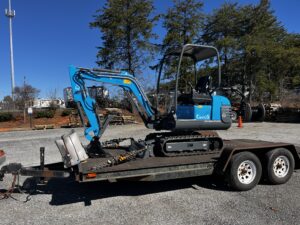
Over-the-road charging is a specialized form of opportunity charging that recharges a towable machine’s battery pack while in transit or active deployment between jobsites. By tapping into the towing vehicle’s electrical system, power is transferred back to the towed equipment during drive time–turning previously unproductive transit time into active battery charging time.
The system can also provide continuous on-site charging while the equipment is deployed on the job. Depending on your operational requirements, Cross engineers can configure software settings to allow active machine operation while charging (such as powering equipment during bridge work) or enforce a safety lockout that disables movement until charging is complete.
2. Why is in-transit charging better than extra battery packs?
Relying on spare batteries or returning to base for grid power creates significant operational drawbacks:
High Costs: Purchasing multiple heavy-duty battery packs drives up cost.
Lost Productivity: Swapping out depleted batteries or calling an early end to a workday causes unnecessary downtime.
Space Constraints: Storing extra battery packs takes up valuable cargo space on work trucks or trailers.
By leveraging OTRC, you extend duty cycles throughout the day while minimizing upfront battery investments.
3. How much extra battery run-time can driving between jobsites actually add?
While charging rates vary based on battery bank size and drive length, OTRC converts previously unproductive transit time into active charging. Even a short 30- to 60-minute drive between jobsites can top off a battery pack enough to add a full extra duty cycle (e.g., expanding daily capacity from 4 jobs to 5) without needing a midday wall plug.
Setup, Technical Mechanics & Applications
4. How does an in-transit or over-the-road charging system work for towable equipment?
Power transfers seamlessly from the towing vehicle to the towed machinery using a combination of specialized vehicle components:
Flexible Alternator Integration: The system taps into the tow vehicle’s electrical output– either utilizing a secondary auxiliary alternator on commercial trucks or integrating directly with a standard alternator.
DC-to-DC Converter: A high-powered DC-to-DC converter steps up the 12V output from the truck’s alternator to the higher voltage (such as 48V) required by the equipment’s battery pack.
Single Trailer Connection: Heavy-duty cabling connects directly to the tow truck’s 12V battery terminals and runs to a single connection point at the rear of the truck, which plugs directly into the trailer tongue to automatically charge the battery whenever the truck is running.
5. Will drawing power from the truck’s auxiliary alternator drain or damage the truck’s main starting battery?
No. The system is engineered to protect the towing vehicle’s electrical system, whether utilizing a dual- or single-alternator setup:
Dual-Alternator Setups: In vehicles with secondary alternators (such as commercial work trucks), the system routes power independently through the secondary alternator without impacting the primary truck battery.
Single-Alternator Setups: For vehicles operating on a single factory alternator, the system dynamically manages its electrical draw so it never exceeds available capacity or impedes base vehicle operation.
The DC-to-DC converter continuously monitors truck voltage in real time. If the system detects a voltage sag on the towing vehicle, it automatically scales back its charging draw to prioritize the truck’s primary power needs, keeping the main battery fully protected.
6. How difficult is the physical connection between the tow truck and the trailer?
It requires only a single connection point at the rear of the truck that mates with a receiver plug on the trailer tongue. Once plugged in, the system operates completely automatically:
Auto-Engagement: When the driver turns the ignition on, the system detects active engine power and automatically begins charging the machine’s battery pack without requiring any manual toggling.
Automatic Shutoff: When the truck is turned off, the system senses the voltage drop (detecting when voltage falls below 13V) and immediately shuts down charging. This guarantees the tow truck’s 12V battery is never drained while parked.
7. What real-world applications benefit most from over-the-road charging?
OTRC is ideal for any trailer-based work machines that perform short-to-medium bursts of work before moving to the next location, including:
Utility Cable Pullers & Reel Trailers: Recharging in transit ensures full pulling power for electric winch systems upon arrival at the next location.
Bridge Inspection & Repair Trailers: Maintaining continuous battery charge as crew vehicles move from structure to structure along highway corridors.
Towable Backhoes & Excavators: Squeezing in active charging cycles during drive time so operators have reliable digging power at every stop.
Mobile Scale Carts & Calibration Rigs: Keeping portable measurement equipment topped off for back-to-back testing visits throughout the day.
Partnering with Cross Company
8. Why partner with Cross Company’s Mobile Systems Integration group for OTRC implementation?
Integrating high-power DC-to-DC conversion and auxiliary charging into mobile machinery requires deep expertise in electric, hybrid, and hydraulic systems. As members of the National Fluid Power Association (NFPA), Association of Equipment Manufacturers (AEM), and International Fluid Power Society (IFPS), Cross provides end-to-end support—from custom electrical design and component sourcing to system testing and ISO-compliant installation. We tailor each system to match your specific vehicle models, battery setups, and daily duty cycles.
Want to learn more about electrifying your mobile equipment or integrating onboard chargers into your OEM machine design? Our Mobile Systems Integration team is ready to help! Contact a Cross electrification expert today to discuss your application.
System integrators must test control system configurations. Ideally we thoroughly test them before systems are delivered. Simulating inputs based on outputs is a key tool to perform these tests.
A global leader in food ingredients provides micro-ingredient feeders to flour and corn mills to facilitate the addition of enrichments, bleaching products, and other additives. To address increasing customer requirements for precision and data logging, the manufacturer partnered with Cross to modernize these systems by retrofitting established hardware with advanced
Maximize efficiency and precision in your automation processes. Learn how to optimize your motion control systems with Applied Motion Products from Cross Company.
Stop patching and start planning. Learn how a phased 6-step roadmap for legacy control system modernization reduces risk, spreads costs, and avoids downtime.
Learn how Cross Process Solutions utilized the KATflow 150 to solve water billing inaccuracies and identify steam leaks for a major manufacturer. Discover the advantages of non-invasive ultrasonic technology for continuous industrial processes where system downtime is not an option.
Cross Company helped a major automotive manufacturing facility in Alabama improve their operation by replacing legacy ultrasonic flow meters. Learn More!
Hang Tight! We're
Searching...
Searching...
Searching...
We’re looking through thousands of pages to find the most relevant information.
In the meantime, enjoy these fun facts…
Did you know… Cross Company is an ESOP (Employee Stock Ownership Plan). Our ESOP started in 1979 and as of 2006, we are 100% employee-owned! Learn more about our ESOP and how that benefits both team members and our customers.
Did you know... the precision measurement group at Cross was founded in 1939 by our current CEO's grandfather, Jim King. That's a whole lot of calibration!
Did you know... A fingerprint weighs about 50 micrograms. We know, we weighed it! The residue left from a finger can actually make a difference in weight results which is why we wear gloves when we calibrate weights. For reference, a sheet of paper is about 4.5 grams, that’s 4.5 million micrograms.
Did you know… Cross Company has grown significantly since our start in 1954. Over the years we've acquired 26 companies! Today, our five groups have expertise in everything from industrial automation to precision measurement, and industry knowledge going all the way back to 1939.

 1. What is over-the-road charging (OTRC), and how does it work for towable mobile machinery?
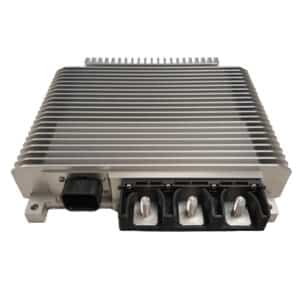 4. How does an in-transit or over-the-road charging system work for towable equipment?