How often are you having to replace load cells? You may be using the wrong load cell.
Do you have load cells that repeatedly fail and need to be replaced? In most applications, a properly specified load cell should last for years. Picking the wrong one for your application can lead to broken or strained load cells that aren’t providing you with reliable measurement data. While we always suggest you consult with a professional when selecting load cells, here are a few important considerations:
Capacity
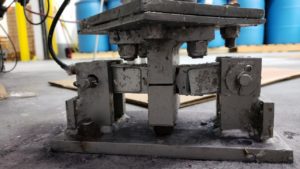 While it may be obvious that you need to determine the capacity needed for the load cells, not everyone takes all the weight into account. In order to not strain or break the load cells you need to know the maximum weight of the material going into the vessel, plus the weight of the vessel itself and any mixers, loaders, etc. that might be connected and adding to the weight. Once you have the total weight you’ll need to divide that by the number of legs on your vessel and that will give you the load cell capacity needed for each load cell.
Static Weighing vs. Oscillating or Mixing
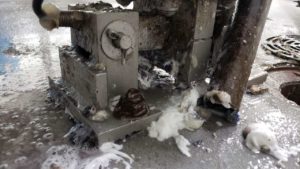 If your vessel is only being used for storage the load will be fairly static. However, if the material is going to be mixed inside the vessel you will need to make sure that the load cells you choose are made to absorb the movement of a mixer and are correctly oriented to handle the direction of the movement. Even the proper load cells can be destroyed if they are oriented incorrectly. Some load cells are made to handle movement in any direction while others are meant to be static or handle movement in only one direction.
The Material Being Weighed
What will you be weighing? Is it water or a corrosive chemical? Knowing the material being weighed is critical in selecting the right load cell. If the material is corrosive or caustic you will want to be sure the load cells are made of stainless steel so they aren’t destroyed if there is a leak. If the material is non-corrosive you may be able to go with the less expensive, mild steel. Some materials (such as chlorine) can eat away at stainless steel at the same rate as they would mild steel. In these cases, it may be more economical to go with the lower-cost option, knowing that it will have to be replaced more regularly regardless of the material.
How Can Cross Help Your Operation?
In the field of metrology, there are many standards to follow to ensure reliable calibration or inspection. At Cross Precision Measurement, we are an ISO 17025 accredited calibration laboratory that adheres to standards set out by A2LA, NTEP, NCWM, and NIST (specifically, HB44). With our decades of experience and expertise, we make sure you get trustworthy, repeatable metrology products, services, and solutions.
The Precision Measurement group of Cross Company provides industry-leading calibration, inspection (on-site or in-lab), equipment repair, and metrology equipment (torque, scales, and other dimensional metrology tools) to manufacturers, commercial facilities, laboratories, and anyone else in need of accurate measurement and results. Through our extensive network of calibration labs, we can get you the metrology services you need to ensure your equipment is reading right every time. Contact Cross Precision Measurement today