ZOOK Resource: The Role of Extrusion Burst Plugs and Rupture Disks in Protecting Modern Extrusion Lines

ZOOK Resource: The Role of Extrusion Burst Plugs and Rupture Disks in Protecting Modern Extrusion Lines 1In plastic and rubber extrusion, pressure is everything. It’s what allows polymer melt to be shaped, controlled, and delivered with precision. But when pressure moves outside its normal operating window, whether due to a blocked die, a screen pack issue, material inconsistency, or a downstream restriction, the results can be expensive at best and dangerous at worst.

This is where extrusion burst plugs and rupture disks play a critical role. These pressure relief devices are often small, simple components, but they serve as the last line of defense against equipment damage, unplanned downtime, and serious safety incidents.

At ZOOK, we’ve spent decades working alongside extrusion processors and OEMs to engineer rupture disks and extrusion burst plugs that perform reliably in high-pressure, high-temperature melt environments. In this blog, we’ll walk through how they work, why their design matters, and the most common FAQs processors ask when specifying pressure relief devices for extrusion.


Understanding Overpressure in Extrusion

Extrusion processes routinely operate at high pressures, often in the 1,000 to 15,000 psi range, depending on the polymer, screw design, and downstream equipment. Under normal conditions, these pressures are stable and predictable. Problems arise when something disrupts melt flow.

Common causes of overpressure in extrusion include:

  • Die restriction or blockage
  • Screen pack fouling or screen changer events
  • Frozen, un-melted, or degraded material
  • Melt pump issues
  • Unexpected contamination or viscosity swings

When pressure spikes occur, the weakest component in the system will fail, unless a properly selected extruder rupture disk (extrusion burst plug) is installed to relieve pressure in a controlled and predictable way.
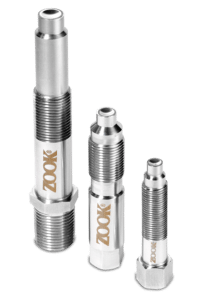
 

Extrusion Burst PlugWhat Is an Extrusion Burst Plug?

An extrusion burst plug, also commonly referred to as an extruder rupture disk, burst disk, or rupture disc, is a non-reclosing pressure relief device designed specifically for polymer melt service. Each ZOOK extrusion burst plug assembly consists of a threaded tubular body with a rupture disk welded onto the process end.

Extrusion burst plugs are mounted directly into the extruder through a pressure port or thermocouple well where critical pressures are experienced, making them a straightforward, engineered safety component for the melt stream.

When system pressure exceeds the predetermined burst pressure, the disk ruptures instantly, venting material and preventing damage to the extruder barrel, die, melt pump, or other downstream components.

Unlike pressure relief valves, extrusion burst plugs:

  • Have no moving parts
  • Require no calibration or routine maintenance
  • React immediately to pressure spikes
  • Have no recesses where product can collect and solidify
  • Must be replaced after activation (single use by design)


Read the full resource
 

More information From ZOOK

Interested in learning more? Contact a Cross team member today to discuss your application and see how we can help your operation!

Latest Cross Company Updates

hoist
Cross Company is pleased to announce that we’re able to offer hoist load testing and certification throughout our service area. That means we can provide the same high-quality service to our customers regularly using hoists to move equipment.
November 3, 2026
Cross Logo
With a comprehensive range of absorbents, spill kits, and containment systems, SpillTech products are designed to handle even the toughest spills, ensuring your work environment remains safe and compliant.
November 1, 2026
Steam is an efficient way to transport energy throughout a facility. This energy is then used for a range of purposes, including heat transfer, power generation, mechanical work, sterilization, and humidification in many different industries. Cross partner Azbil’s vortex flow meters make measuring steam flow easy, reliable and cost effective.
October 30, 2026
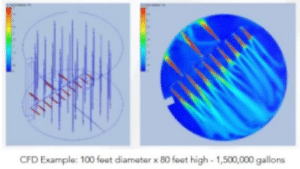
In the oil and gas industry, keeping solids in suspension while blending various grades of crude oil for proper processing poses significant operational challenges. Traditional methods often require substantial energy inputs, complex equipment
October 30, 2026
Waste water, often called process water, is a by-product within all chemical, refining, pharmaceutical, and food industries. EPA regulations mandate that all water returning to or interacting with the environment be safe and consistent with the water found naturally within the area.
October 30, 2026
safety relief valve before calibration
Valve automation allows remote operation or position indication of valves within a process. Instead of requiring manual adjustment, automation improves operational efficiency with quicker, more accurate valve action
October 30, 2026
Cross Logo

Contact our Team

"*" indicates required fields

This field is for validation purposes and should be left unchanged.
What can we help you with today?*

Where Can We Send Your Information?

Name*
Company Location*
Form Type

Hang Tight! We're Searching... Searching... Searching...

We’re looking through thousands of pages to find the most relevant information.

In the meantime, enjoy these fun facts…

Did you know… Cross Company is an ESOP (Employee Stock Ownership Plan). Our ESOP started in 1979 and as of 2006, we are 100% employee-owned! Learn more about our ESOP and how that benefits both team members and our customers.
Did you know... the precision measurement group at Cross was founded in 1939 by our current CEO's grandfather, Jim King. That's a whole lot of calibration!
Did you know... A fingerprint weighs about 50 micrograms. We know, we weighed it! The residue left from a finger can actually make a difference in weight results which is why we wear gloves when we calibrate weights. For reference, a sheet of paper is about 4.5 grams, that’s 4.5 million micrograms.
Did you know… Cross Company has grown significantly since our start in 1954. Over the years we've acquired 26 companies! Today, our five groups have expertise in everything from industrial automation to precision measurement, and industry knowledge going all the way back to 1939.