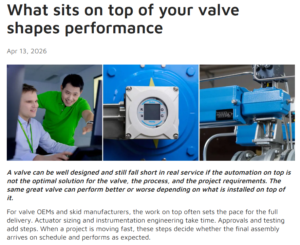
 A valve can be well designed and still fall short in real service if the automation on top is not the optimal solution for the valve, the process, and the project requirements. The same great valve can perform better or worse depending on what is installed on top of it.
For valve OEMs and skid manufacturers, the work on top often sets the pace for the full delivery. Actuator sizing and instrumentation engineering take time. Approvals and testing add steps. When a project is moving fast, these steps decide whether the final assembly arrives on schedule and performs as expected.
Why many OEMs work with a valve automation partner
Many OEMs build excellent valves, but do not want to carry the full valve automation workload in-house for every project. Instead, they look for a partner who can turn a customer specification into a working configuration. This includes top-tier quality components that are reliable, tested, and delivered as a ready-to-integrate assembly. Two things often drive that decision.
- Confidence in the final assembly – Valve automation is not only about parts. It is also about making sure the assembly meets requirements and works in the plant environment. Top-tier components, a proven track record, clear specification coverage, and relevant certifications ensure optimal solution and reduce uncertainty for the OEM and the end user.
- A reliable delivery model – When automation comes from multiple sources, interfaces multiply. When it comes as one assembly from one responsible source, the delivery is easier to manage. This approach also supports smoother ordering, installation, integration, and serviceability.