Application Note: The Right Gas Detection for the Job

Cross Company recently partnered with a utility provider having ongoing issues with fixed gas detection systems. By working with Cross, they were able to significantly improve not only data collection, calibration potential, and cost savings, but also life safety and the security of everyone working there.

The Challenge
This customer had 24 Honeywell brand methane gas sensors placed outdoors in fixed segments around energy-generating turbines. Ideally, these sensors would alert personnel to methane build-up to maintain both a safe working environment and a safe energy production process.

However, the sensors regularly experienced electronic failures, leading to costly replacements and important sensors being out of commission. So our experts were called in to diagnose why failures were occurring and potentially determine solutions that didn’t involve having to regularly replace failing instrumentation.

The Solution

rki instruments corporate logoOne of the first things we typically ask when showing up for a job is “Is your instrumentation performing like you expect it to perform?” And if the answer is no, our follow-up action is to figure out why.

In the case of our utility provider customer, we quickly saw that the infrared-based Honeywell technology was not optimal for an outdoor setting. While infrared instrumentation can be highly reliable in ideal conditions, when it is regularly exposed to moisture and ambient humidity, problems can arise. With the sensors placed outside and exposed to those moisture and humidity changes, we could diagnose that the wrong technology was being used for the application.

We immediately recommended switching to RKI for fixed gas metering in an outdoor setting.

Cross was able to replace all 24 existing methane gas sensors with RKI fixed gas detection instrumentation in segments of 8 sensors per unit, replacing every sensor without having to shut the whole process down. This allowed for a successful swap-out of the Honeywell sensors with the more optimal RKI sensors. And since then, the customer has had zero operational failures in methane gas detection systems.

The Benefits
Beyond the obvious benefits of functioning instrumentation and improved life safety, making the switch over to RKI fixed gas detection provided other benefits for our customer as well.

Fully functioning instrumentation is able to provide accurate and consistent data collection (benefitting operations). Further, the RKI gas sensors are easier to maintain, as operation and maintenance is easier (leading to significant cost savings over time).

In the end, the customer also ended up upgrading their portable sensors to RKI, creating a consistent gas detection system across the whole operation.

If your process instrumentation isn’t performing like you need it to, Cross Company can help. Our experts will take a look at your process and work with you to optimize anything that’s not working how you expect it to work. That way, you’re getting smooth, predictable operations every time.

Latest Cross Company Resources

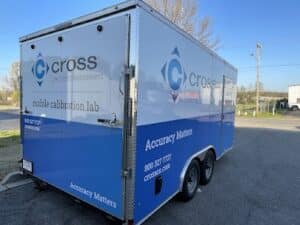
Cross Precision Measurement transformed a Tennessee energy facility’s metrology program by deploying a custom mobile calibration lab. Delivering ISO 17025-accredited calibrations directly on-site, Cross eliminated downtime, improved accuracy, and ensured complete audit readiness.
October 5, 2026
Cross Logo
System integrators must test control system configurations. Ideally we thoroughly test them before systems are delivered. Simulating inputs based on outputs is a key tool to perform these tests.
July 28, 2026
Author – Chris Hardy
Cross Logo
A global leader in food ingredients provides micro-ingredient feeders to flour and corn mills to facilitate the addition of enrichments, bleaching products, and other additives. To address increasing customer requirements for precision and data logging, the manufacturer partnered with Cross to modernize these systems by retrofitting established hardware with advanced
June 30, 2026
Cross Logo
production line using servo drive automation
Maximize efficiency and precision in your automation processes. Learn how to optimize your motion control systems with Applied Motion Products from Cross Company.
June 16, 2026
Cross Logo
Stop patching and start planning. Learn how a phased 6-step roadmap for legacy control system modernization reduces risk, spreads costs, and avoids downtime.
April 9, 2026
Cross Logo
katronic logo
Learn how Cross Process Solutions utilized the KATflow 150 to solve water billing inaccuracies and identify steam leaks for a major manufacturer. Discover the advantages of non-invasive ultrasonic technology for continuous industrial processes where system downtime is not an option.
February 9, 2026
Cross Logo

See How A Solution From Cross Can Benefit Your Operation

Contact our Team

"*" indicates required fields

This field is for validation purposes and should be left unchanged.
What can we help you with today?*

Where Can We Send Your Information?

Name*
Company Location*
Form Type

Hang Tight! We're Searching... Searching... Searching...

We’re looking through thousands of pages to find the most relevant information.

In the meantime, enjoy these fun facts…

Did you know… Cross Company is an ESOP (Employee Stock Ownership Plan). Our ESOP started in 1979 and as of 2006, we are 100% employee-owned! Learn more about our ESOP and how that benefits both team members and our customers.
Did you know... the precision measurement group at Cross was founded in 1939 by our current CEO's grandfather, Jim King. That's a whole lot of calibration!
Did you know... A fingerprint weighs about 50 micrograms. We know, we weighed it! The residue left from a finger can actually make a difference in weight results which is why we wear gloves when we calibrate weights. For reference, a sheet of paper is about 4.5 grams, that’s 4.5 million micrograms.
Did you know… Cross Company has grown significantly since our start in 1954. Over the years we've acquired 26 companies! Today, our five groups have expertise in everything from industrial automation to precision measurement, and industry knowledge going all the way back to 1939.