Kawasaki K3VL and K3VLS Series Pumps with Power Shift Control

Rock Able | April 20th, 2017
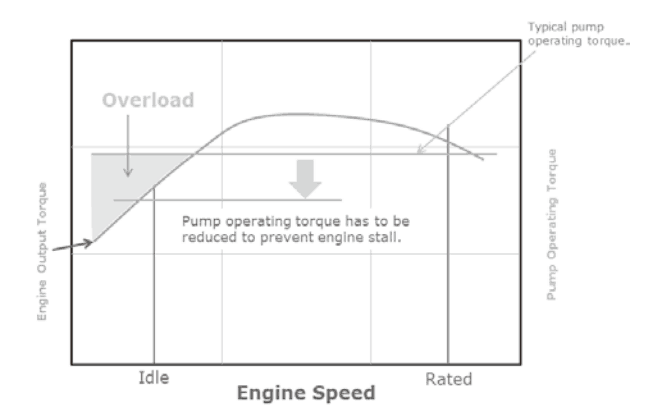
With today’s ever changing demands on hydraulics and the advent of new Tier 4 engine, the need to vary the input torque of hydraulic pumps becomes evident. When the engine is operating at low idle, available torque is low and can be stalled. Using the Power Shift regulator, input torque to the pump can be limited to prevent engine overload and stalling at varying engine speeds and output power. Optimizing the horsepower input demands of the pump can result in significant savings in fuel consumption and emission output. Kawasaki Power Shift is a low-cost alternative that maximizes machine versatility and can be retrofit into existing machine design platforms. It reduces fuel consumption, emissions, and noise. Being able to operate at lower RPM with maximum efficiency, a significant reduction in cooling demands and overall machine wear will be realized.
Kawasaki K3VL and K3VLS Series Pumps with Power Shift Control 1

Figure 1

From Figure 1 we can see that as engine speed varies, available output torque varies as well. To prevent engine stall, the input torque requirement of the pump must change accordingly.
Kawasaki K3VL and K3VLS Series Pumps with Power Shift Control 2

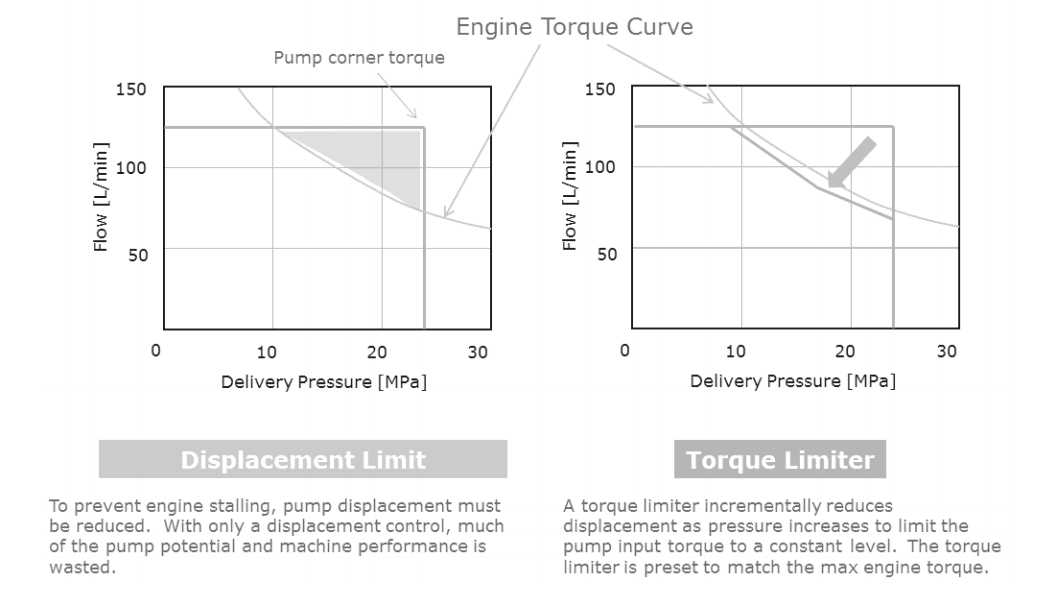
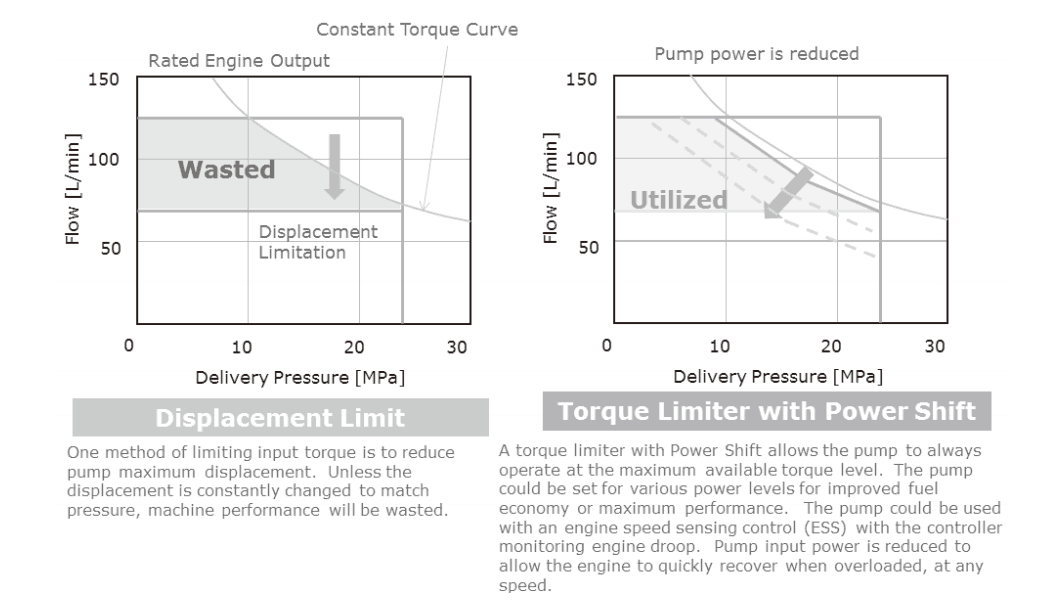
Figure 2

A torque limiter with Power Shift allows the pump to always operate at the maximum available torque. The pump can be set for various power levels for improved fuel economy or maximum performance. The pump can be used with an engine speed sensing control (ESS)with the controller monitoring engine droop. Pump input power is reduced to allow the engine to quickly recover preventing overload, at any speed.
Kawasaki K3VL and K3VLS Series Pumps with Power Shift Control 3

Figure 3

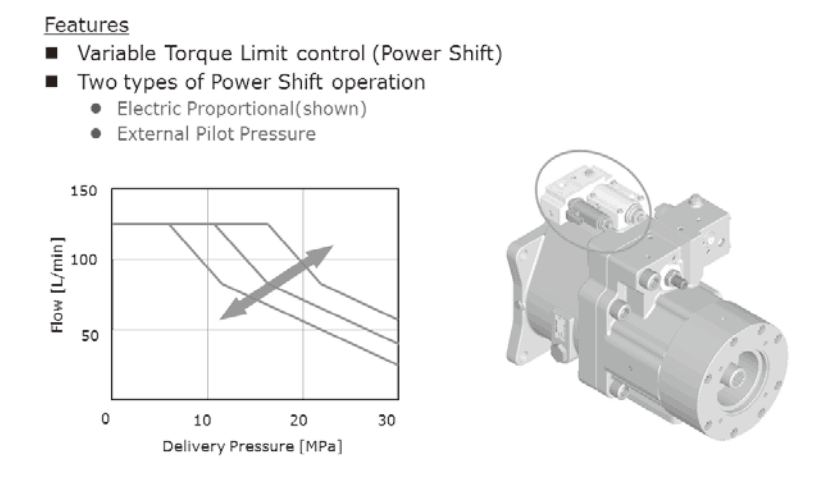
There are currently two versions of Power Shift available to meet system design requirements, electric proportional or hydraulic pilot control.
Kawasaki K3VL and K3VLS Series Pumps with Power Shift Control 4

Key benefits of Kawasaki Power Shift:

  • Reduction in emissions
  • Reduction in fuel consumption
  • Reduction in noise emission
  • Reduction in cooling demands
  • Increased machine versatility
  • Longer machine life
  • Can be retrofit to existing platforms
  • Lower implementation cost

Latest Cross Company Updates

From beer to soft drinks, high-quality, food-grade hoses are necessary to enable a clean, sanitary, and safe fluid transfer during the production process. See how a solution from Parker can help improve your process.
October 1, 2026
We’ve added solid metal conductivity and torque multipliers to our 17025 scope in Atlanta! See what else we’ve added!
September 28, 2026
Cross Logo
When dealing with older machined components like plastic injection molds or stamping dies, maintaining and restoring tools without existing CAD files can be a massive hurdle.
September 10, 2026
It is obvious that for the process to work efficiently and without problems, it is necessary to choose the right equipment in the right places for the process. This once again proved to be true, when Michigan Sugar was facing problems
September 8, 2026
Gases like hydrogen, helium and oxygen are in higher demand than ever before. This means the equipment used in these units and applications must maintain its reliability and provide longevity within the process.
September 8, 2026

Contact our Team

"*" indicates required fields

This field is for validation purposes and should be left unchanged.
What can we help you with today?*

Where Can We Send Your Information?

Name*
Company Location*
Form Type

Hang Tight! We're Searching... Searching... Searching...

We’re looking through thousands of pages to find the most relevant information.

In the meantime, enjoy these fun facts…

Did you know… Cross Company is an ESOP (Employee Stock Ownership Plan). Our ESOP started in 1979 and as of 2006, we are 100% employee-owned! Learn more about our ESOP and how that benefits both team members and our customers.
Did you know... the precision measurement group at Cross was founded in 1939 by our current CEO's grandfather, Jim King. That's a whole lot of calibration!
Did you know... A fingerprint weighs about 50 micrograms. We know, we weighed it! The residue left from a finger can actually make a difference in weight results which is why we wear gloves when we calibrate weights. For reference, a sheet of paper is about 4.5 grams, that’s 4.5 million micrograms.
Did you know… Cross Company has grown significantly since our start in 1954. Over the years we've acquired 26 companies! Today, our five groups have expertise in everything from industrial automation to precision measurement, and industry knowledge going all the way back to 1939.