Zek Grantham | July 23rd, 2018
Troubleshooting and monitoring a hydraulic system has always been a major challenge in the industry. The downtime alone can cost thousands of dollars even before components start being replaced. Other problems come when a dealer or leasing company has dozens of units in the field and no way of knowing if they are working properly and being maintained as required. Now, these problems can be a thing of the past.
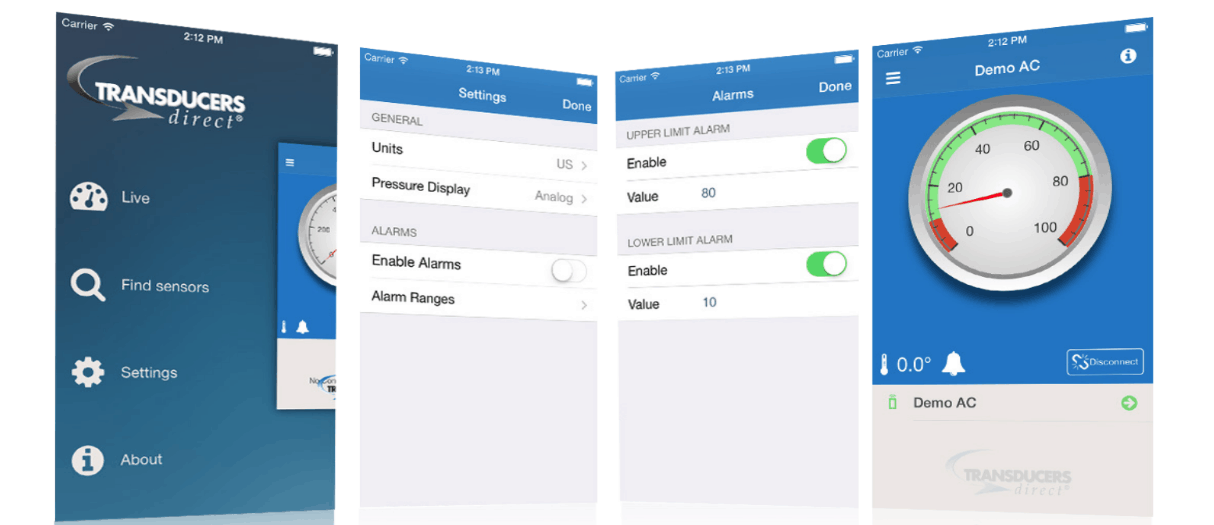
Bluetooth capable pressure transducers are a low-cost solution to monitoring your hydraulic system. These sensors can be monitored from a computer or smartphone either at the machines site or from across the country. These transducers come in a variety of pressure ranges and functionality. Options include monitoring pressure via Bluetooth on site, data logging the information that can be recovered and exported to an Excel spreadsheet, and even monitoring and recording pressure readings in real time from across the globe.
The possibilities and opportunities are vast with a pressure range from 50 – 10,000 PSI and a variety of port thread types. These wireless transducers can be added to any location on your hydraulic system. With an accuracy of up to 0.25% (roughly 0.2 PSI), these transducers can precisely monitor pressures throughout your hydraulic system. A user changeable battery makes maintaining and extending the life of these transducers very simple.
Real World Benefits of a Bluetooth Pressure Transducer
Being able to monitor and take pressure readings from a machine is very useful and can save hours on troubleshooting. They are also ideal for fleets. By putting a transducer before and after a return filter, you can monitor the pressure drop across the filter to determine if it needs to be changed or how much life is left in it.
An additional benefit of these pressure transducers is that they can be equipped with a temperature probe. This way you can monitor the fluid temperature at the reservoir via Bluetooth on your smartphone while the system is running and in motion. These sensors can be set up on your phone to send alerts if a system reaches a set max pressure or a max temperature. This can be critical and save your hydraulic system before a catastrophic failure occurs.
These transducers are also a great service/maintenance tool. As long as there is a port to screw them into, you can install them and go through a system check while monitoring the machine while it is in operation.
The corresponding app for both Apple and Android smartphones is very user-friendly and easy to configure. With multiple sensors available on a single screen, you can monitor an entire system of transducers or multiple systems all at once. These wireless Bluetooth pressure transducers can cut down on troubleshooting and system downtime which saves money and unneeded part replacement.
When properly applied, they can monitor and help maintain a hydraulic system or a fleet of systems all at once. Using Bluetooth capable sensors will keep you a step ahead and always on top of your hydraulic systems.
Interested in learning more? Contact a Cross team member today to discuss your project and see how we can benefit your operation!