Maintaining Compliance and Safety With Leak Detection System Upgrade
 Cross Process Solutions, in partnership with RKI Instruments, successfully executed a complete overhaul and upgrade of the gas leak detection system for a world leader in the production of fluorochemicals in Augusta, GA. The project focused on replacing aging hardware, software, and integrating a full-scope solution to ensure safe, repeatable, and data-driven operations.
The Challenge: Proactive Obsolescence Mitigation
Our customer recognized that its existing gas detection system, while currently functional, would shortly become obsolete, as spare parts for the aging hardware would soon be unavailable. This could obviously lead to unplanned downtime.
The chemical manufacturer opted to replace their system before it reached its end-of-life. This proactive approach prioritized site safety and operational continuity, allowing for a more streamlined integration process within their highly regulated industry.
The Solution: Trust, Collaboration, and Integrated Implementation
The foundation of the project’s success was the collaborative approach between the manufacturer and Cross, ensuring the new system was precisely engineered to the plant’s needs. “I enjoyed the process of designing the system and collaborating with Cross and RKI Instruments; it was a great experience,” said the project engineer who worked with Cross.
Cross engineers, alongside RKI Instruments experts, worked directly with our customer’s team to execute a full-system upgrade:
- Risk Assessment and Analysis: Cross engineers performed a detailed, collaborative physical survey of the plant with the manufacturers personnel. This process identified the specific sensors for toxic and explosive gases. These are detected with Tox and LEL (Lower Explosive Limit) sensors that would become obsolete and dictate the precise requirements for the replacement system.
- Accelerated Installation: The entire installation was completed in under 12 months, significantly faster than industry standard. The project prioritized safe uptime; Cross engineers ensured production was maintained by immediately installing the replacement equipment as sections were temporarily taken offline.
- Full System Integration and Commissioning: Cross handled all aspects of the installation, including electrical installation, conduit, cabling, and full system calibration. The new system included advanced data loggers and integrated software compatible with the plant’s existing control systems (DCS).
Delivering on Customer Expectations
The new system was specifically designed to meet our customer’s requirements for:
- Data: The system provides timestamped, high-resolution data logged directly from the instrument to the control system. This ensures comprehensive data acquisition for both regulatory reporting and internal process optimization.
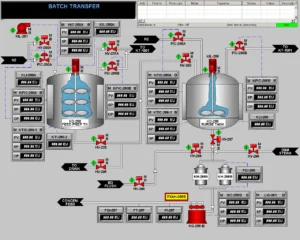
- Ease of Use & Safety: The HMI provides a safe, central, and controlled environment for operators to view alerts and manage the system effectively. The new system’s reliability and design contribute directly to personnel confidence. The project engineer said, “Operators can approach the area with caution because they’ll know what to expect and feel safe with the system.”
- Future-proofed: Cross established a long-term maintenance program to ensure the system’s continued reliability and functionality, regardless of internal staff turnover.
Commitment to Continued Partnership
 Cross’s commitment extends beyond the system’s commissioning, reinforcing the foundation of trust that drove the project:
- Comprehensive Training: The manufacturer’s technicians were fully trained by Cross engineers and RKI Instruments experts on system operation, maintenance, and two-person calibration procedures.
- Maintenance: An Annual Service Agreement (ASA) was put in place to ensure scheduled, ongoing calibration and maintenance, allowing our customer to sustain optimal system performance and integrity.
- Turnkey Service and Support: The comprehensive support model simplified the long-term maintenance for our customer. “I appreciated the service contract. It really felt turnkey because you installed it and we can still reach out with questions or issues and count on Cross being able to visit onsite to help us troubleshoot if anything goes wrong. Especially as a small company, sometimes we just don’t have all the resources,” said the project engineer.
Our customer’s proactive investment ensures their continued operation is safe, compliant with regulatory requirements, and protected against future system failures. By partnering with Cross, the manufacturer transformed a looming operational risk into a sustainable, long-term safety advantage that paid dividends on safety, uptime, and lower insurance costs. Check out the full Cross Company offering for the automotive and chemical industries or contact us directly for process solutions or flow control applications.