Pneumatic Actuator Speed Control

Controlling the speed of pneumatic actuators and keeping actuator speed constant

It is frequently helpful to know the basic practices for controlling pneumatic actuator speed, as well as a few guidelines for gathering the information to properly select the components.

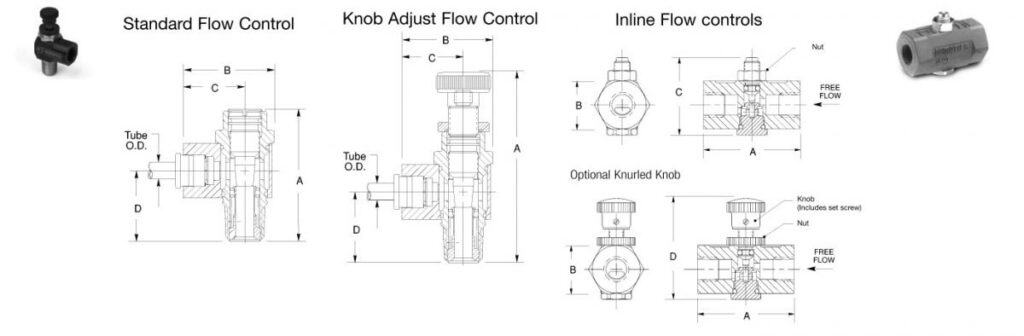
If you are looking to control the speed of the pneumatic actuator in your application, the most effective way is to use a speed control valve or flow control valve to vary the amount of flow out of the exhaust port of the actuator.

In order to adjust the speed, the flow must be controlled, where as adjusting the force of the actuator should be handled by controlling the pressure. Adjusting the pressure may have an effect on the speed, but is not a recommended method to control the speed.

To maintain a constant speed for your pneumatic actuator, size a fixed orifice for a constant flow on the exhaust port of the pneumatic actuator in conjunction with a pressure regulator on the input. The pressure regulator will ensure that the output pressure will remain constant (relatively) given a varying input pressure. The fixed orifice will maintain the desired flow to maintain the proper speed for your pneumatic actuator.
 

Pneumatic Actuator Speed Control 1


In order to properly size a flow control valve, you will need 3 things:

  • A maximum pressure
  • Thread size
  • Tube size

Armed with this information, you can now select the proper valve for your application. These valves can be installed directly into actuator ports, directly installed into the valve exhaust ports, or simply installed into the exhaust line.

In order to size the fixed orifice properly, you will need to know the supply pressure, fitting size, and desired flow of the output. After calculating the fixed orifice size, try a few similar sizes to ensure that you are getting the desired result.

Once again, the fixed orifice should be installed on the exhaust port of the actuator or into the exhaust line.

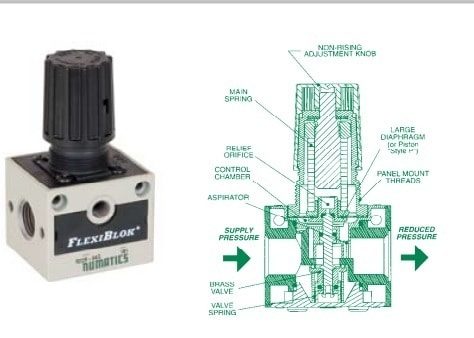
To size the pressure regulator, you will need to know:

  • The port size
  • Threads
  • Input pressure
  • Output pressure
  • Whether it needs to be relieving or non-relieving pressure regulator.

Pressure regulators should almost always be placed upstream of the control valve. If one needs to be installed between the valve and actuator, then one with bypass flow path should be used.
 

Pneumatic Actuator Speed Control 2


The pneumatics experts in Cross’s Automation group can help you to select the correct flow control valves, fixed orifices and pressure regulators. Contact us today to discuss your particular application.

Latest Cross Company Resources

Learn how we helped a customer shrink their hydraulic reservoir by 63% with no loss in performance
January 26, 2026
Cross Logo
An animal healthcare leader in Durham, North Carolina, recently faced a critical threat to its production operations. Vendor-driven equipment obsolescence and sudden price spikes threatened output, forcing the team to find a viable alternative to maintain their critical processes.
January 12, 2026
Cross Logo
This automated palletizing cell improves stack consistency, reduces labor, and lowers the risk of injury. Watch the video to see how! CrossCo Automation.
October 2, 2025
Cross Logo
Dr. Daniel Moore is an Assistant Professor in the Ophthalmology and Visual Sciences Department at a major research university. He specializes in glaucoma, an eye disease which is due to several different factors.
September 30, 2025
Cross Logo
Pallet of Boxes
Historically, Lindy’s relied on small thermometers mounted on support columns to keep track of the temperature in their cold storage. Several times a day, someone had to walk around the refrigerated warehouse, collecting data by hand and then manually entering the information into the company’s quality system. Not only was
September 30, 2025
Cross Logo
KapStone Paper and Packaging makes unbleached kraft paper and high performance lightweight liner board. Their Roanoke Rapids, North Carolina plant, set on the banks of the Roanoke River, runs 24/7 with approximately 430 employees producing over 470,000 tons of paper per year. The Fiber Supply department works with local vendors
September 30, 2025
Cross Logo

See how our team can help improve efficiency, reduce risk, and raise quality in your process.

Share This Material

Contact our Team

Hang Tight! We're Searching... Searching... Searching...

We’re looking through thousands of pages to find the most relevant information.

In the meantime, enjoy these fun facts…

Did you know… Cross Company is an ESOP (Employee Stock Ownership Plan). Our ESOP started in 1979 and as of 2006, we are 100% employee-owned! Learn more about our ESOP and how that benefits both team members and our customers.
Did you know... the precision measurement group at Cross was founded in 1939 by our current CEO's grandfather, Jim King. That's a whole lot of calibration!
Did you know... A fingerprint weighs about 50 micrograms. We know, we weighed it! The residue left from a finger can actually make a difference in weight results which is why we wear gloves when we calibrate weights. For reference, a sheet of paper is about 4.5 grams, that’s 4.5 million micrograms.
Did you know… Cross Company has grown significantly since our start in 1954. Over the years we've acquired 26 companies! Today, our five groups have expertise in everything from industrial automation to precision measurement, and industry knowledge going all the way back to 1939.