Legacy control systems rarely fail in a single, dramatic moment. Instead, they become a slow-motion drag on your reliability, your people, and your ability to grow. By the time most plants feel the real pain, they are juggling obsolete hardware, losing tribal knowledge to retirement, and drowning in a backlog of “just keep it running” work. Whether your system is running a single machine or an entire plant, ignoring aging equipment is not a sustainable strategy.
The instinct is often to wait for a total system failure or to jump straight into a massive rip-and-replace project. But a complete overhaul often brings its own set of problems including prohibitive downtime, extreme capital requirements, and high operational risk.
At Cross Company, we believe there is a better way and we advocate for a phased modernization strategy. This approach reduces risk, spreads costs over time, and captures quick wins while building toward a flexible, connected architecture.
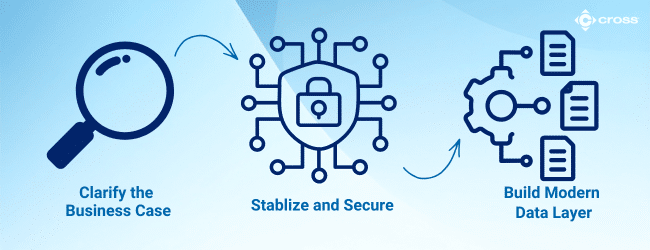
Step 1: Clarify the Business Case Before Touching Hardware
Before discussing platforms or protocols, you must identify why you are modernizing. Start by asking questions about your workflow:
- Identify the primary driver: Is it risk (safety/obsolescence), cost (maintenance/energy), or capacity (bottlenecks)?
- Determine “low-hanging fruit”: Start with the small changes that offer the highest immediate ROI.
- Align to results: Ensure the roadmap prioritizes budget and uptime rather than upgrading just because new technology exists.
A thorough discovery process sets the table for a successful modernization project. Whether you complete internally or work with an integration provider, don’t be tempted to skip this step in an effort to reduce timelines.
Step 2: Stabilize and Secure the Existing System
You don’t have to wait for the end state to start getting value. The first phase is about supportability. By making smart swaps, you can make immediate improvements without interrupting production so it’s worthwhile seeing if drop-in replacements exist.
For example, Cross recently helped an animal health OEM facing an obsolescence crisis specify a new, drop-in panel PC replacement to continue production. We also worked with an automotive manufacturer to locate a 2-wire toxic gas transmitter for immediate drop-in, instead of rewiring with miles of cables to accommodate a newer 3-wire version.
Step 3: Build a Modern Data Layer on Top
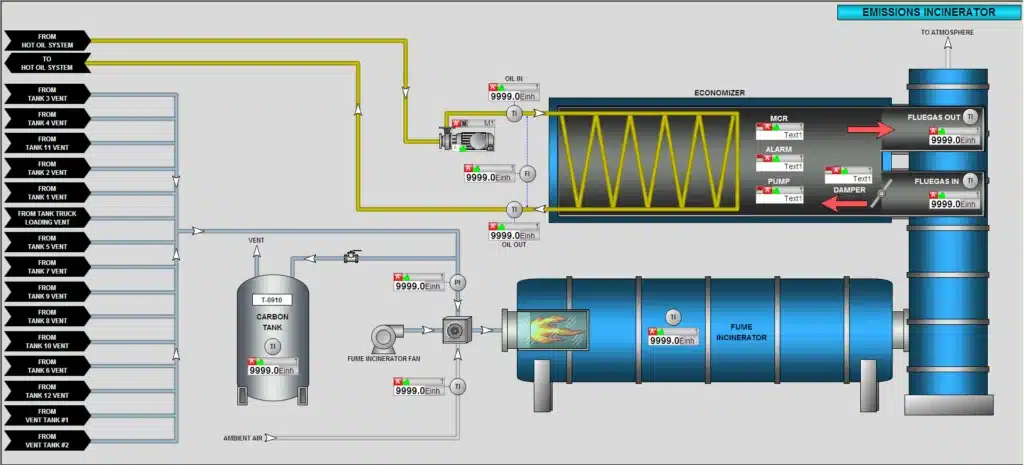
Once the system is stable, you can add a visualization layer without disturbing the core control logic. Data is your best tool to proactively monitor older hardware. This may include introducing a new SCADA platform that communicates with existing PLCs to provide better alarming and mobile dashboards. Some modern SCADA systems feature embedded trending and reporting functions, which reduce overhead costs by providing site personnel with advanced visualization without the need for additional third-party software.
To feed their systems, facilities often implement edge control devices. These act as a universal translator for your facility. These gateways allow you to add “smarts” to older, “dumb” machines within your existing footprint, pulling real-time data on everything from pressure and speed to maintenance and quality trends. By organizing this information through universal protocols like OPC UA, you gain a clear view of hidden inefficiencies without the need for a costly overhaul.
Modernizing your data layer also allows you to identify issues before they cause a shutdown. This visibility transforms maintenance from a reactive cycle into a strategic operation where potential failures are addressed during scheduled downtime. This bridge between legacy hardware and modern software provides the information needed to prioritize which parts of the plant truly require a full hardware upgrade.
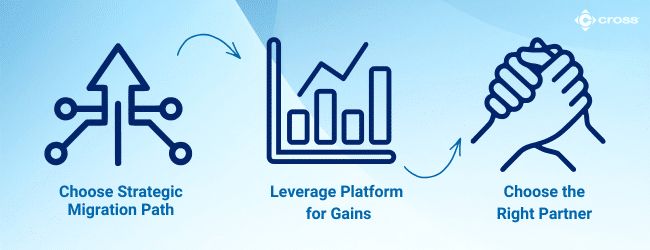
Step 4: Choose Your Migration Path Strategically
The “right” path depends on your footprint, your budget, and how much downtime you can afford. We explain in our Innovating the Industrial World podcast, that the goal is an “F1 pit stop” style migration.
When it comes to a DCS, detailed planning and clearly defining what the requirements are for the system, an experienced integrator can swap systems in 24–48 hours rather than weeks. Whether you choose a retrofit, a staged migration, or a full replacement, the strategy must be dictated by your plant’s specific downtime constraints and physical space.
Similarly, when it comes to upgrading a machine’s operating system, our team focuses on three areas to ensure a seamless transition:
- Phased Controller Migration: Upgrading the “brain” of the machine—the PLC and HMI—to modern models while keeping existing hardware in place. This allows the site to see immediate gains in reliability while deferring the most complex components to a later phase to minimize downtime.
- Platform Standardization: Moving from legacy programming to modern, unified software environments. This makes it easier for technicians to troubleshoot and ensures that the machine logic is clear, organized, and ready for future data integration.
- Pilot-to-Scale Rollouts: Validating the modernization on a single pilot machine before scaling the solution across multiple production lines or additional facilities. This ensures a consistent, high-performing standard across the entire footprint.
Step 5: Leverage the New Platform for Real Gains
Modernization shouldn’t end with “it works the same as before.” A modern platform allows for advanced optimization, predictive maintenance, and enhanced compliance.
Don’t forget: Technology fails when it ignores the people using it. Ensure your team is ready for the transition through hands-on operator training, updated loop sheets, and long-term support plans.
Step 6: Choose the Right Modernization Partner
Modernizing a legacy system is a journey. Whether you are solving obsolescence in a PLC cabinet or upgrading your PLC or DCS system, you need a partner who understands both the technology and the underlying process.
Ready to move from “it still runs” to “it runs better, safer, and smarter”? Contact Cross today to schedule an obsolescence and risk assessment for your facility.